



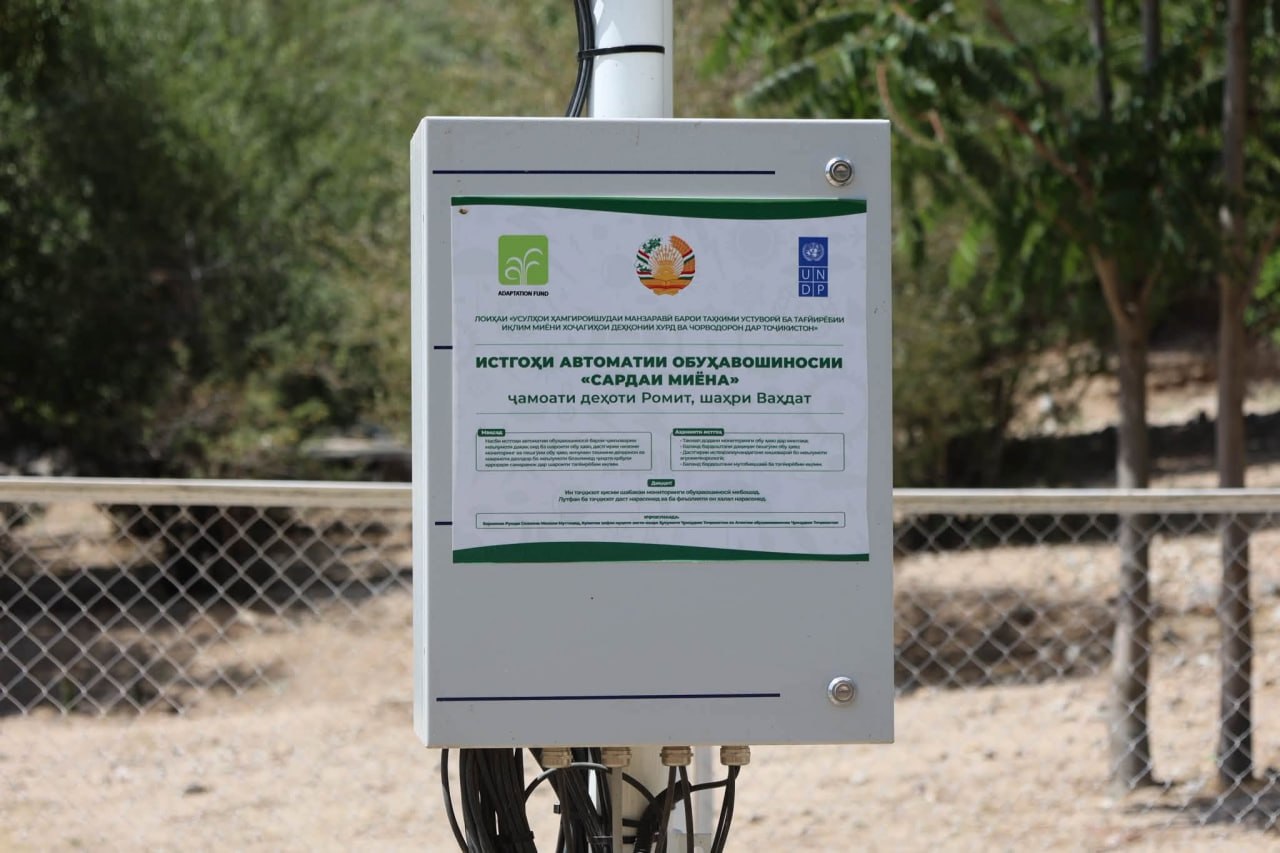
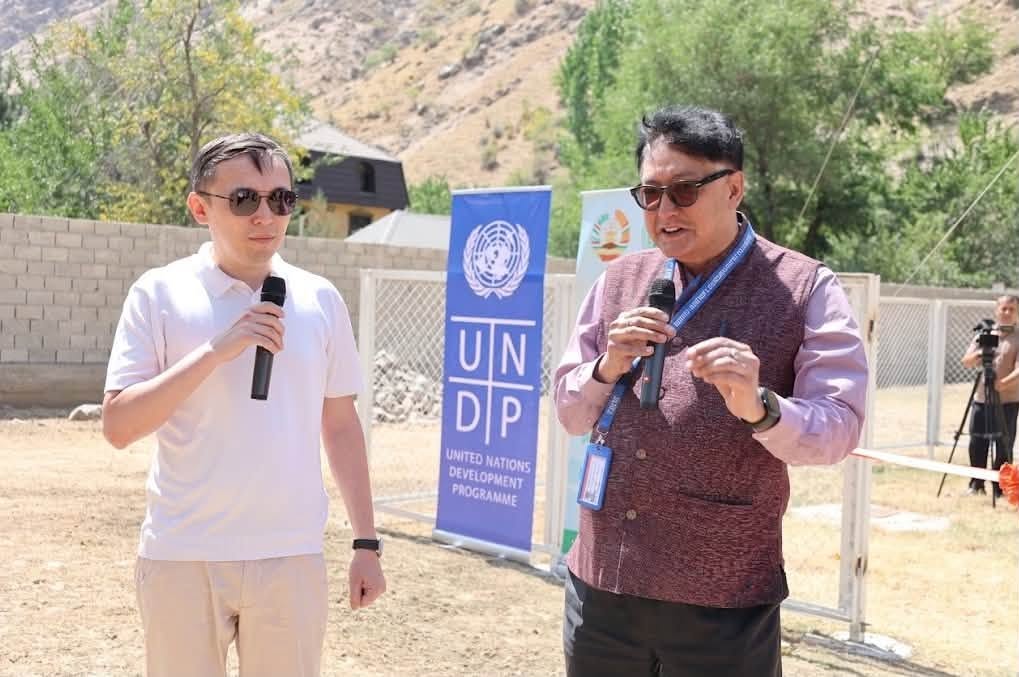
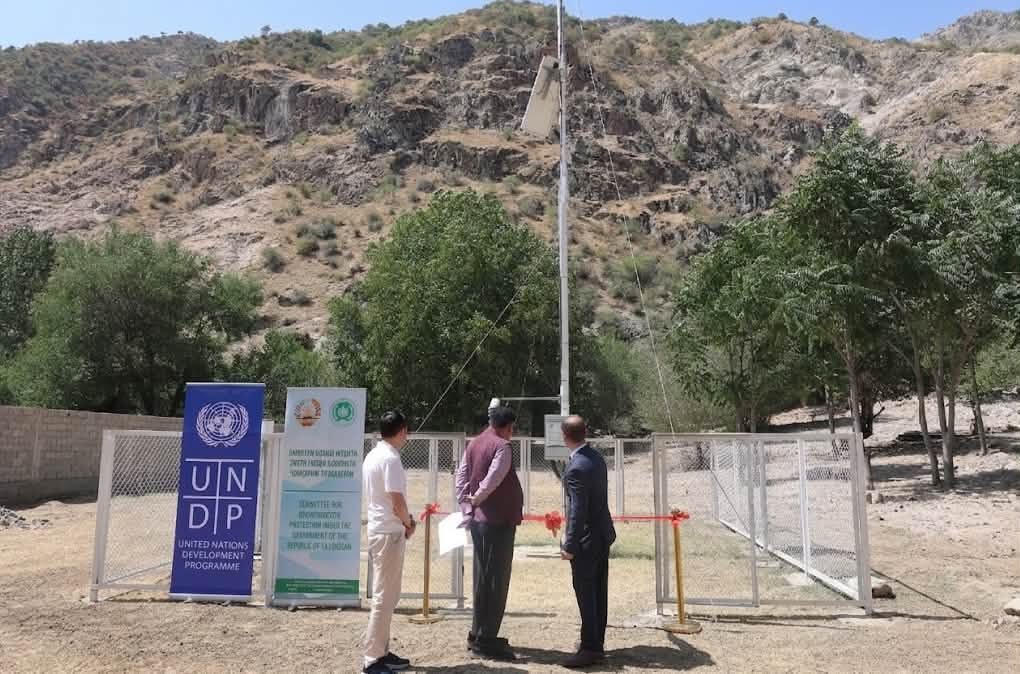
As part of the fruitful cooperation between the Agency for Hydrometeorology of the Committee for Environmental Protection under the Government of the Republic of Tajikistan and the United Nations Development Programme (UNDP) in Tajikistan, three automated weather stations have been installed and commissioned in the Kofarnihon River Basin under the project “Integrated Landscape Approach to Enhance Climate Resilience among Smallholder Farmers and Pastoralists in Tajikistan.” The stations are located in Tartki (Shahritus District), Sardai-Miyona (Vahdat City), and Elok (Rudaki District).
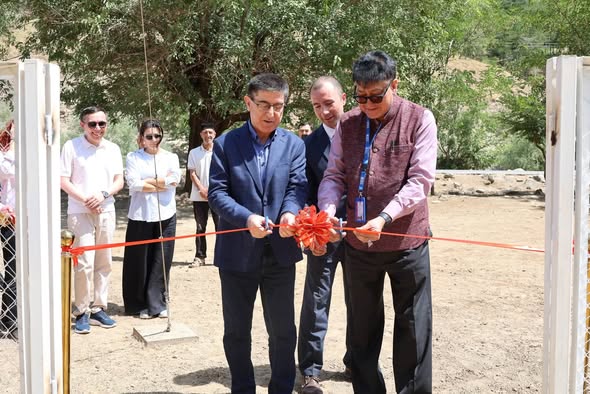
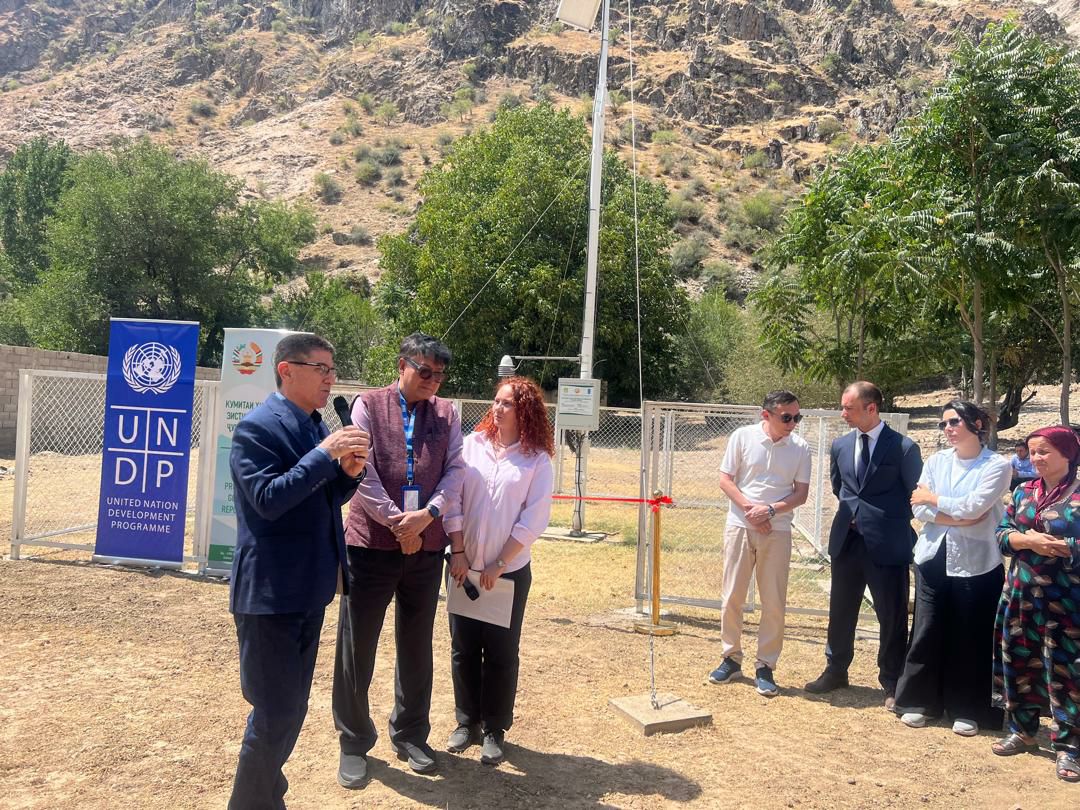
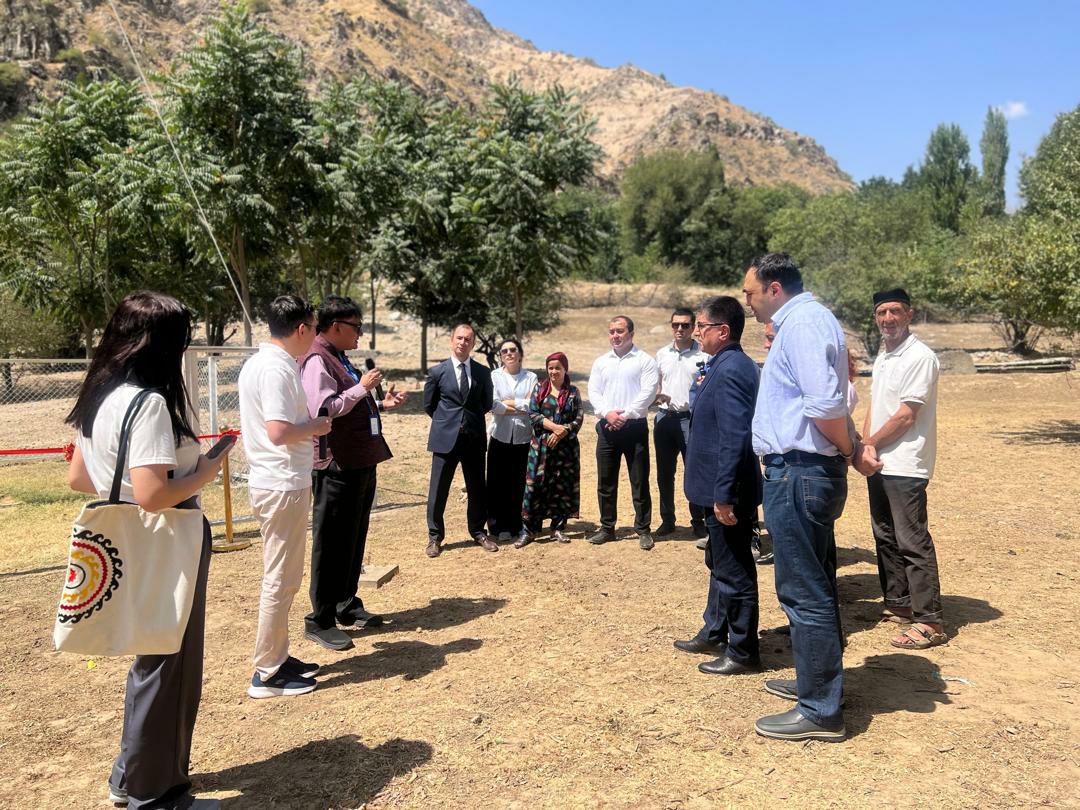
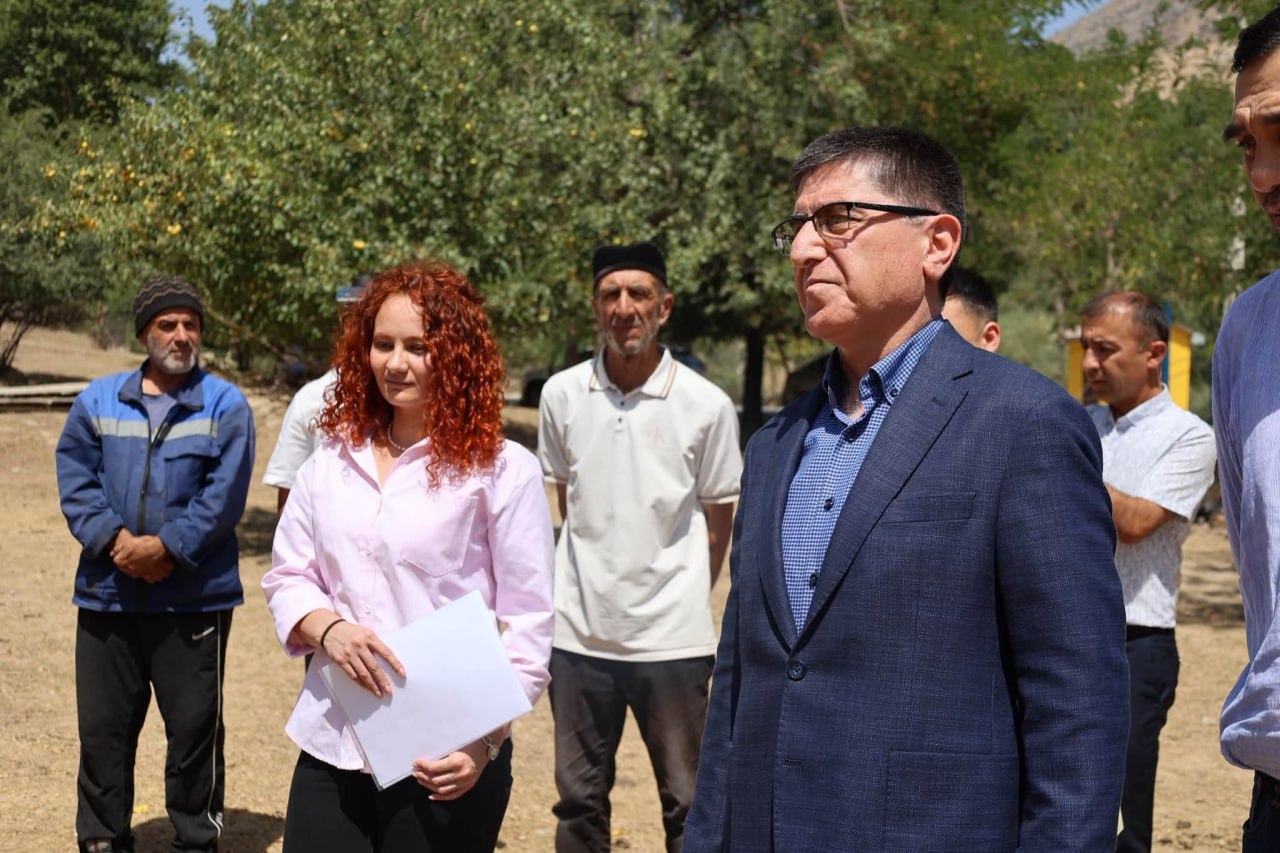
On 19 August 2026, the commissioning ceremony was attended by Abdullo Qurbonzoda, Director of the Agency for Hydrometeorology; Sudipto Mukerjee, UNDP Resident Representative in Tajikistan; Umed Vahobov, Head of UNDP’s Climate Resilience Cluster; Giyosiddin Nemonov, Adaptation Fund Project Manager; Anvarshoh Jabborov, Deputy Director of the Romit Biosphere Reserve; Aslam Rasulzoda, Deputy Director of the Institution for Specially Protected Natural Areas; representatives of local communities; and other officials.
It was noted that the installation of these modern automated weather stations represents an important step towards improving the hydrometeorological observation network, enhancing weather monitoring, and ensuring timely access to accurate information.
The stations record key meteorological parameters in real time, including precipitation intensity, air temperature, wind speed, and other indicators. The collected data are automatically transmitted to the Agency, enabling continuous monitoring and analysis of weather conditions.
This initiative contributes to strengthening the technical capacity of the hydrometeorological sector, improving weather forecasting, advancing early warning systems for hazardous natural events, and increasing society’s preparedness for the impacts of climate change.
The Agency for Hydrometeorology intends to further strengthen cooperation with development partners in order to introduce modern technologies and continue developing the country’s observation infrastructure.
20.08.2026